

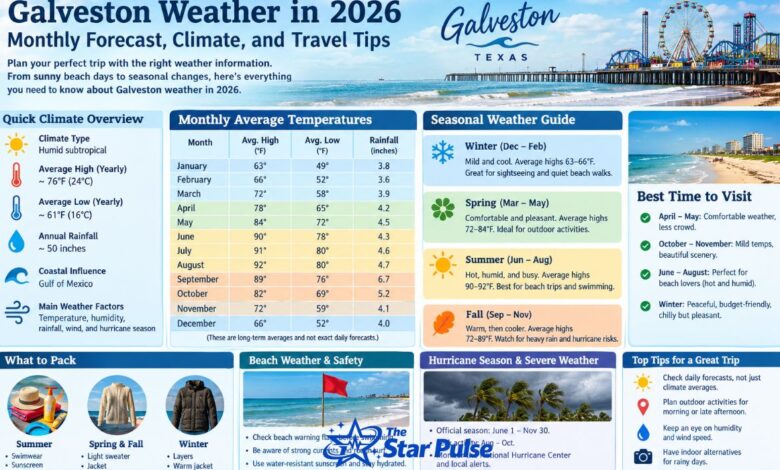
Galveston Weather is an important consideration for anyone planning a beach vacation, weekend getaway, fishing trip, or outdoor activity along the Texas Gulf Coast. Located on Galveston Island, this coastal city experiences hot, humid summers, relatively mild winters, and changing weather conditions throughout the year. Its location near the Gulf of Mexico influences temperatures, humidity, rainfall, sea breezes, and the possibility of tropical storms.
In 2026, understanding Galveston’s seasonal climate can help visitors choose the right travel dates, pack suitable clothing, and plan outdoor activities more confidently. However, monthly climate patterns are different from an actual weather forecast, which can change from day to day. This guide explains Galveston weather by month, seasonal temperatures, beach conditions, hurricane risks, and practical travel tips to help you prepare for your visit.
Understanding Galveston Weather and Its Coastal Climate
Galveston has a humid subtropical climate shaped by its position on the Texas coast. The Gulf of Mexico moderates temperatures, meaning winter conditions are generally milder than those in many inland parts of the United States. Summers are typically hot, with high humidity that can make the air feel warmer than the thermometer suggests. Sea breezes sometimes provide relief, although they do not eliminate the effects of extreme heat.
Rain can occur in every season, and conditions may change quickly near the coast. Morning sunshine can give way to afternoon showers or thunderstorms, particularly during warmer months. Humidity is another important factor because it can make outdoor exercise and sightseeing more tiring. When checking a Galveston weather forecast, travelers should look beyond the temperature and consider rainfall probability, wind speed, humidity, and severe weather alerts.
Galveston Weather by Month: January to March
January is generally the coolest month, with average daytime highs near 63°F and nighttime lows around 49°F. It is a good time for visitors who prefer peaceful beaches, scenic walks, and sightseeing without intense summer heat. February gradually becomes warmer, with average highs around 66°F and lows near 52°F. March brings a noticeable improvement in outdoor conditions, with average highs around 72°F and lows near 58°F. Spring begins to feel closer, making March suitable for exploring the historic district, visiting local attractions, and enjoying waterfront restaurants. These figures are long-term climate averages, not guaranteed temperatures for January, February, or March 2026.
April and May: Comfortable Spring Weather
April usually brings average highs near 78°F and lows around 65°F, creating comfortable conditions for sightseeing and outdoor recreation. May becomes warmer, with average highs reaching approximately 84°F and nighttime temperatures around 72°F. These months can be appealing for beach visits, walking along the Seawall, photography, and exploring Galveston’s historic architecture. However, spring weather can still include rain, thunderstorms, and changing coastal winds. Travelers should check the Galveston weather forecast before scheduling boat trips or outdoor events. Lightweight clothing, sunscreen, sunglasses, and a compact rain jacket are useful additions to a spring travel bag.
June to August: Hot Summer Conditions
Summer is the busiest beach season in Galveston, bringing warm Gulf waters, long daylight hours, and high humidity. June typically averages highs around 90°F, while July and August can reach average highs of approximately 91–92°F. Nighttime temperatures often remain near 78–80°F, so evenings may not feel particularly cool. Heat-sensitive travelers should plan outdoor activities for early morning or late afternoon, drink water regularly, and take breaks in air-conditioned spaces. Afternoon thunderstorms are possible, and lightning can make beaches unsafe. Although summer is attractive for swimming and family holidays, checking daily temperatures, rain chances, and beach safety information is essential.
September to December: Autumn and Winter Trends
September remains warm, with average highs near 89°F and lows around 76°F. It is also an important month to watch for heavy rainfall and tropical weather. October becomes more comfortable, averaging highs near 82°F and lows around 69°F. November cools further, with typical highs around 72°F and lows near 59°F. December usually brings highs around 66°F and lows near 52°F. Autumn can be attractive for sightseeing and quieter beach walks, while December is suitable for a relaxed coastal escape. Nevertheless, September and October still fall within the Atlantic hurricane season, so travelers should monitor official weather updates before and during their visits.
Rainfall, Humidity, and Wind in Galveston
Rainfall is an important part of Galveston Weather because coastal showers can affect beach plans, road travel, and outdoor events. NOAA climate normals show that precipitation varies throughout the year, with September averaging approximately 6.7 inches at the Galveston Scholes Field station. August averages around 4.7 inches, while January, June, November, and December also receive meaningful rainfall. Humidity can remain noticeable even when temperatures are moderate. Wind conditions may change with passing fronts, thunderstorms, and coastal weather systems. Before heading out, check hourly precipitation forecasts, wind speed, and thunderstorm alerts rather than relying only on a daily high temperature.
Galveston’s beaches attract swimmers, families, anglers, and visitors interested in coastal recreation. During summer, warm air and Gulf waters can create inviting beach conditions, but sunshine does not automatically mean swimming is safe. Strong currents, rough surf, thunderstorms, and local water advisories can affect conditions. Before entering the water, check lifeguard guidance and posted beach warning flags. Red flags indicate dangerous surf or currents and should be taken seriously. Visitors should also apply water-resistant sunscreen, drink enough water, and avoid swimming during lightning or severe weather. For the most useful beach weather update, check both the air forecast and current marine or beach safety information.
Hurricane Season and Severe Weather Safety
The Atlantic hurricane season officially runs from June 1 through November 30, with activity commonly peaking between August and October. NOAA’s August 2026 seasonal outlook projected a below-normal Atlantic season, but that prediction does not mean Galveston is protected from tropical storms or hurricanes. Seasonal forecasts describe overall basin activity, not whether a particular city will experience a landfall. Visitors should monitor the National Hurricane Center, the National Weather Service, and local emergency instructions. If a tropical system threatens the Texas coast, follow evacuation orders, confirm accommodation policies, and avoid driving through floodwater.
Best Time to Visit Galveston in 2026
The best time to visit depends on your budget, preferred temperatures, and planned activities. April and May are appealing for comfortable sightseeing before peak summer heat, while October and November can offer milder weather for walking tours and exploring local attractions. June through August is often preferred by beachgoers who want hot weather and warm water, although humidity and crowds may be greater. Winter is worth considering for travelers who prefer quieter surroundings and do not require consistently hot beach conditions. No season guarantees sunshine, so compare accommodation prices with the forecast and keep an indoor alternative available.
What to Pack for Galveston Weather
Packing according to the season can make your trip more comfortable. For summer, bring breathable clothing, swimwear, sandals, sunscreen, sunglasses, a hat, and a reusable water bottle. A light rain jacket is helpful throughout the year. Spring and autumn visitors may want a light sweater for breezy evenings, while winter travelers should pack layers and a medium-weight jacket. If your plans include fishing, boating, or other marine activities, consider suitable footwear and weather-resistant clothing. Check your forecast shortly before departure, since a cooler front or rain system may change what you need.
How to Check an Accurate Galveston Weather Forecast
For reliable information, use the National Weather Service forecast for Galveston and surrounding coastal areas. Check the hourly forecast for rain, temperature changes, wind, and thunderstorms. If you plan to spend time on the water, consult marine forecasts and official beach safety information as well. A seven-day forecast can help with general planning, but confidence usually decreases further into the future. Recheck conditions on the morning of your activity and whenever alerts are issued. Climate averages explain what is typical; live forecasts tell you what is expected now.
Outdoor Activities and Weather Planning
Galveston’s weather can influence everything from beach outings to historic sightseeing. On hot days, schedule walking tours early and use indoor attractions during the warmest afternoon hours. On breezy days, waterfront walks may be pleasant, but boat excursions can become uncomfortable when winds strengthen. Rainy conditions are an opportunity to visit museums, browse local shops, or enjoy indoor dining. Families should bring extra water and sun protection, while travelers with flexible schedules can shift outdoor activities to clearer periods. Checking the forecast before leaving your accommodation helps reduce disruptions and makes a short visit more enjoyable.
Final Thoughts
Galveston Weather in 2026 varies from mild winter conditions to hot, humid summers, with rainfall and tropical weather risks adding uncertainty throughout the year. Monthly climate averages help visitors choose a season, but daily forecasts are necessary for decisions about swimming, boating, sightseeing, and travel safety. Spring and autumn often offer a useful balance of warmth and comfortable outdoor conditions, while summer suits visitors seeking a traditional beach holiday. Check official forecasts, prepare for changing conditions, and remain alert during hurricane season to make your Galveston trip safer and more enjoyable.
FAQs
1. What is the best month to visit Galveston?
April, May, October, and November are good options for comfortable sightseeing and outdoor activities. Summer is better for visitors seeking hot beach weather, but humidity and heat can be intense.
2. How hot does Galveston get in summer?
Average highs reach approximately 90–92°F from June through August. High humidity can make conditions feel hotter, so visitors should stay hydrated and avoid prolonged midday exposure.
3. Does Galveston get hurricanes?
Yes. Galveston is on the Texas Gulf Coast and can be affected by tropical storms and hurricanes. The Atlantic hurricane season runs from June through November, so check official alerts when traveling during this period.
4. Does it rain a lot in Galveston?
Rain occurs throughout the year, although monthly totals vary. September is particularly wet in the long-term climate averages, making rain forecasts important for outdoor plans.
5. Is Galveston good for a winter vacation?
Yes. Winters are generally mild, with average daytime highs around 63–66°F in December and January. Winter is suitable for sightseeing and coastal walks, although it may be too cool for some visitors to enjoy swimming.