
Why the Celebrity Tequila Boom Is Cooling, and What Fame Has to Do With How We Drink

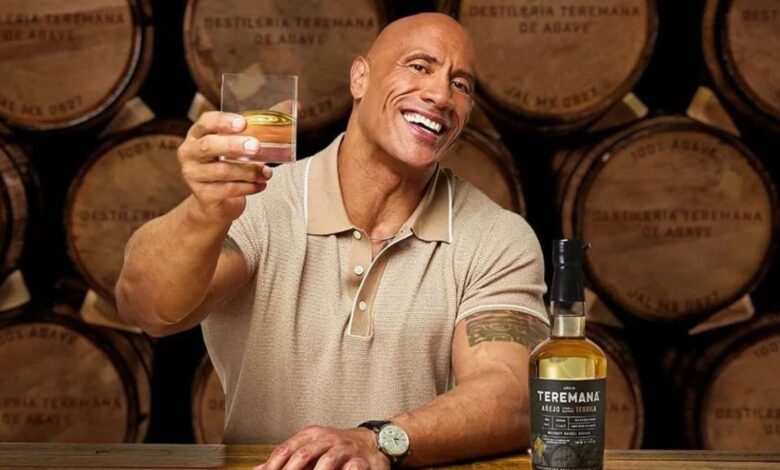
For the best part of a decade, it felt as though every other famous face had a bottle to sell. Actors, musicians, fighters and reality stars all seemed to arrive at the same idea, usually involving tequila, a sleek label and a story about friends sharing a drink somewhere sunny. Now the trade press is calling time on the trend. In July 2026, the drinks industry outlet BevX ran a piece with a blunt headline, “The celebrity spirits boom is over”, pointing out that sales of Casamigos, the tequila brand co-founded by George Clooney, fell 18 percent in 2025.
That is a business story, but it is also a story about how fame shapes the way we think about alcohol. Fame can make drinking look glamorous, but the same spotlight has also shown its costs, with stories of famous names entering a luxury rehab or speaking openly about sobriety becoming a familiar part of celebrity news. Both sides of that coin are worth looking at, especially now that fewer people seem keen to buy into the fantasy.
From Billion-Dollar Bottle to Falling Sales
The deal that arguably kicked off the gold rush came in June 2017, when the drinks giant Diageo agreed to buy Casamigos. As WGBH reported at the time, Diageo paid $700 million up front, with a further $300 million depending on the brand hitting sales targets, taking the potential total to $1 billion. Clooney and his co-founders, Rande Gerber and Michael Meldman, were to keep promoting the brand.
A headline figure like that was always going to attract imitators. Yet the numbers have turned. When Diageo reported its results for the 2026 financial year, the trade publication Drinks Intel reported that its tequila sales in the US were down 21.1 percent, with Casamigos down 27.7 percent and Don Julio down 19.2 percent in that market. Those are big drops for a category that was, not so long ago, the darling of the drinks world.
A Country Drinking Less Than It Used To
The celebrity bottle has not simply fallen out of fashion. It is also chasing a smaller pool of drinkers. Gallup, which has asked Americans about their drinking habits since 1939, found in its July 2025 poll that just 54 percent of US adults said they drink alcohol, the lowest figure in the history of the survey and below the previous low of 55 percent recorded in 1958. Its 2026 survey, carried out in July, found the figure holding at 54 percent.
Attitudes to health have shifted too. In the 2025 Gallup poll, reported by BevNET, 53 percent of adults said that moderate drinking, defined as one or two drinks a day, is bad for your health. It was the first time a majority had said so, compared with 28 percent in 2018. Among adults aged 18 to 34, half said they drink, and 66 percent of that age group said alcohol is bad for health.
Why Famous Faces Sell Drinks So Well
There is a reason brands wanted stars in the first place. A celebrity brings instant recognition, a ready-made audience and a lifestyle people would quite like to borrow, even just for the length of a drink. Public health researchers have been looking at what that kind of marketing does for years.
A systematic review by David Foxcroft and Lesley Smith, published in BMC Public Health in 2009, examined seven cohort studies following more than 13,000 young people aged 10 to 26. The authors concluded that the data suggest an association between exposure to alcohol advertising or promotion and later drinking in young people, while cautioning that the effect sizes were modest and could be influenced by unmeasured factors.
The World Health Organization raised similar concerns in its 2022 report on cross-border alcohol marketing. The WHO noted that the reach of social media advertising is “strengthened by social influencers” and by users sharing posts, and that digital marketing increasingly uses data on people’s habits to target specific groups. Closer to home, a BMJ Open study of around 3,300 British 11 to 19 year olds, as summarised by the public health group Movendi in 2019, found celebrity endorsements were among the forms of alcohol marketing teenagers noticed most often, and linked awareness of alcohol marketing with higher drinking.
What Is Taking the Shine Off the Celebrity Bottle
No single factor explains the slowdown. Taken together, the sources above point to several pressures arriving at once.
- Fewer drinkers overall: With Gallup recording record-low drinking rates in both 2025 and 2026, any new brand is competing for a shrinking group of customers.
- Changing views on health: Gallup’s finding that most adults now see moderate drinking as harmful suggests the glamour sell has a harder job than it once did.
- Scandal risk: BevX argues that a living celebrity’s controversy can damage a brand mid-campaign, which is one reason it says some producers are turning to the estates of stars who died long ago.
- Stars moving on: According to BevX, Clooney himself has moved on to non-alcoholic beer, a small but telling sign of where some of the attention is heading.
- Tighter scrutiny of marketing: The WHO has called for stronger regulation of digital alcohol marketing, putting influencer-led promotion under a brighter light.
None of this means famous names will vanish from the drinks aisle overnight. It does suggest that the easy money of the late 2010s, when a recognisable face and a nice bottle seemed almost guaranteed to sell, has gone.
The Other Side of the Spotlight
Celebrity culture has always had two stories to tell about alcohol. One is the party: the red carpet, the launch, the toast. The other is quieter and often more honest, as public figures talk about cutting back, stopping altogether or getting help. Those conversations have helped to make sobriety feel less like a confession and more like an ordinary, even aspirational, choice.
For anyone who has picked up a celebrity bottle partly because of the name on it, this moment is a useful prompt to ask a simple question: am I drinking because I enjoy it, or because of the image that comes with it? Fame can sell a feeling, but it cannot tell you what alcohol is doing to your own sleep, mood, finances or relationships.
A Few Honest Questions to Ask Yourself
If you are rethinking your own habits, it can help to keep a simple diary of when and why you drink for a few weeks. Notice whether certain people, events or feelings tend to come before a drink. If cutting back feels harder than you expected, or if drinking is starting to cause problems at work or at home, speaking to your GP is a sensible first step, as they can talk through options and point you to appropriate support.
Frequently Asked Questions (FAQs)
1. Is the celebrity spirits trend really over?
Not completely, but the trade press suggests it has slowed sharply. BevX argued in July 2026 that the boom in living-celebrity spirits brands has ended, pointing to falling sales at Casamigos and a shift towards brands built around stars who are no longer alive.
2. Does celebrity marketing actually affect how much young people drink?
Research suggests there is a link, though not proof of direct cause. A 2009 systematic review in BMC Public Health found an association between exposure to alcohol advertising and later drinking among young people, and the WHO has warned that influencers strengthen the reach of alcohol marketing on social media.
3. Are fewer people drinking now than in the past?
In the United States, yes. Gallup’s long-running poll found that 54 percent of adults said they drink in both 2025 and 2026, the lowest level since the survey began in 1939, with growing numbers saying that even moderate drinking is bad for health.