
Desk Exercises for Office Workers: Easy Ways to Stay Fit Without Leaving Your Chair

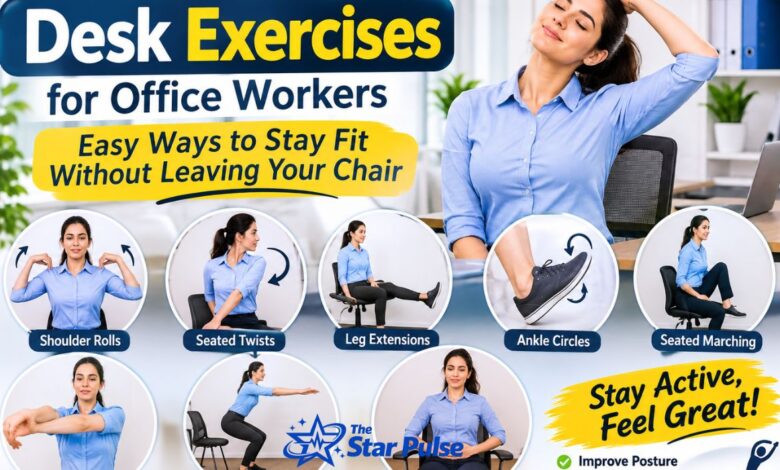
Spending several hours at a desk can make it difficult to maintain an active lifestyle. Office workers often experience stiff shoulders, back discomfort, tight hips, and tired muscles because of prolonged sitting. Finding time for the gym is not always possible, especially with busy schedules and daily responsibilities. Fortunately, desk exercises offer a simple way to introduce physical activity into the working day. These movements require little space and can be performed without expensive equipment. From seated stretches and shoulder rolls to leg extensions and chair squats, small exercises can help improve mobility and interrupt long periods of inactivity. Whether you work from home or in a traditional office, adding a few minutes of movement to your routine can support a healthier working lifestyle.
Why Desk Exercises Are Important
Desk exercises help office workers reduce the amount of uninterrupted sitting in their daily routines. Remaining in one position for extended periods can contribute to muscle stiffness and reduced mobility. Regular movement encourages the body to change positions and use different muscle groups. Even short activity breaks can make a working day feel more comfortable. These exercises are particularly useful for people who spend most of their time typing, attending meetings, or working on computers. Although they cannot replace a complete fitness program, they provide an accessible starting point for developing healthier habits.
Seated Neck Stretches
Neck stretches are useful for people who spend hours looking at computer screens. Poor screen positioning and limited movement can contribute to tension around the neck and shoulders. Sit upright with your feet flat on the floor and slowly tilt your head toward one shoulder. Hold for 10 seconds before returning to the center and repeating on the opposite side. You can also gently turn your head from left to right. Avoid forcing the movement or stretching too aggressively. These simple office stretches can help introduce gentle movement during computer work.
Shoulder Rolls for Upper-Body Relief
Shoulder rolls are among the easiest desk exercises because they require no equipment. Sit comfortably with your arms relaxed. Slowly raise your shoulders toward your ears, move them backward, and lower them gently. Repeat 10 times before changing direction. This movement encourages mobility around the shoulder joints and helps interrupt the forward-leaning position commonly associated with computer work. Performing shoulder rolls during short breaks can make your office exercise routine easier to maintain.
Seated Spinal Twists
Sitting continuously can make the back feel stiff and uncomfortable. Seated spinal twists provide a gentle way to introduce rotation into your upper body. Sit upright with both feet on the floor. Place one hand on the opposite thigh and slowly turn your upper body toward that side. Hold for a few seconds, return to the center, and repeat on the other side. Keep the movement comfortable and avoid twisting suddenly. This exercise is a convenient option for people who want to improve everyday back mobility without leaving their chairs.
Seated Leg Extensions
Seated leg extensions are simple chair exercises that activate the muscles around the thighs. Sit upright with both feet on the floor. Slowly extend one leg until it is nearly straight, hold for two seconds, and lower it. Repeat with the opposite leg. Complete 8 to 12 repetitions on each side, depending on your comfort. This exercise is particularly convenient for employees who spend most of their working hours sitting. It also helps add lower-body movement without requiring additional space.
Ankle Circles and Calf Raises
Your ankles and calves also need movement during long working hours. To perform ankle circles, lift one foot slightly and rotate your ankle slowly in both directions. Repeat with the other foot. For seated calf raises, keep your toes on the floor and lift your heels before lowering them again. These movements are simple, convenient, and suitable for short office breaks. They encourage gentle lower-leg activity but should not be considered treatment for circulation problems or unexplained swelling.
Seated Marching
Seated marching is a beginner-friendly exercise that can be performed almost anywhere. Sit near the front of a stable chair and keep your back comfortably straight. Lift your right knee slightly, lower it, and then lift your left knee. Continue alternating sides for approximately 30 to 60 seconds. Maintain a steady breathing rhythm and avoid rushing. This low-impact office workout helps introduce regular leg movement without requiring employees to leave their workstations.
Wrist and Finger Stretches
People who spend hours typing may experience tired or uncomfortable wrists and fingers. Gentle hand exercises can provide a break from repetitive movements. Extend one arm forward with your palm facing upward. Use your opposite hand to gently guide your fingers downward until you feel a mild stretch. Hold briefly and switch sides. You can also spread your fingers apart, make a relaxed fist, and open your hand several times. Avoid forcing the joints. Persistent pain, numbness, or tingling should be assessed by a healthcare professional.
Standing Chair Squats
Standing chair squats add a useful lower-body movement to your office fitness routine. Stand in front of a stable chair with your feet approximately shoulder-width apart. Slowly bend your knees and move your hips backward as if preparing to sit. Briefly approach the chair before returning to a standing position. Start with five to eight repetitions and increase gradually. Keep your movements controlled and avoid forcing your knees or back. If squats cause discomfort, choose a gentler movement or seek professional guidance.
Seated Abdominal Tightening
Seated abdominal tightening encourages awareness of the muscles that support your trunk. Sit upright with both feet resting on the floor. Gently tighten your abdominal muscles as if preparing for a light cough, while continuing to breathe normally. Hold for approximately five seconds and relax. Repeat several times without leaning backward or holding your breath. This simple movement can complement other desk exercises, although it does not replace a complete core-strengthening workout.
Create a 10-Minute Desk Exercise Routine
A short exercise routine can help employees stay consistent without disrupting their schedules. Start with one minute of neck stretches and shoulder rolls. Spend two minutes performing spinal twists and wrist stretches. Follow these with two minutes of seated leg extensions and ankle circles. Use another two minutes for seated marching or standing chair squats. Finish with abdominal tightening and gentle relaxation movements. You can complete the routine during one break or divide it into smaller sessions throughout the day.
Tips for Staying Active During Office Hours
Staying active requires more than exercising once during the working day. Change your sitting position regularly, stand during suitable phone calls, and take short walking breaks whenever possible. Adjust your monitor to a comfortable viewing height and keep your feet supported. You can also use reminders to encourage movement between tasks. Outside working hours, consider walking, cycling, swimming, or strength training to complement your desk exercises. Combining different activities creates a more balanced approach to everyday fitness.
Common Desk Exercise Mistakes to Avoid
One common mistake is performing stretches too quickly or forcing movements beyond a comfortable range. Another is exercising on an unstable chair or in a crowded area. Avoid holding your breath, rushing through repetitions, or continuing an exercise that causes sharp pain. It is also important not to depend entirely on desk workouts for physical fitness. Combine office stretches with regular walking and other suitable activities. People with injuries or existing medical concerns should seek professional advice before starting a new routine.
Final Thoughts
Desk exercises provide an easy and practical way for office workers to introduce more movement into their daily schedules. Activities such as shoulder rolls, seated marching, ankle circles, leg extensions, and chair squats can help interrupt long periods of sitting and encourage better movement habits. Most exercises require little space and no special equipment. Start with a few simple movements, gradually develop a consistent routine, and choose activities that feel comfortable. Remember that desk exercises work best alongside regular walking, balanced nutrition, and other forms of physical activity. Small daily changes can make your working routine more active and manageable.
FAQs
1. What are the best desk exercises?
Seated marching, shoulder rolls, neck stretches, wrist movements, ankle circles, and seated leg extensions are useful choices. They require minimal space and can be performed during short workplace breaks.
2. Can desk exercises improve posture?
Yes. Gentle movements can support mobility around the neck, shoulders, and back. However, good posture also depends on proper workstation positioning and regularly changing your sitting position.
3. How often should I do desk exercises?
Taking short movement breaks every 30 to 60 minutes is a practical starting point. You can adjust the frequency according to your working schedule and comfort.
4. Can desk exercises help with weight loss?
Desk exercises contribute to daily physical activity, but they usually do not burn enough calories to produce significant weight loss alone. Combine them with regular workouts and balanced nutrition.
5. Are desk exercises suitable for beginners?
Yes. Most basic desk exercises are beginner-friendly and require no special equipment. Start slowly, use a stable chair, and avoid movements that cause pain or discomfort.