
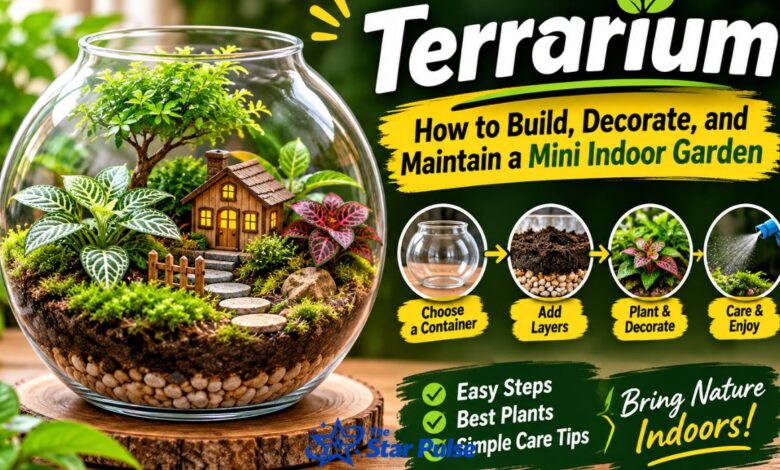
A terrarium is a beautiful way to bring nature indoors by creating a miniature garden inside a transparent glass container. It combines small plants, natural materials, soil, stones, and decorative elements to produce an attractive indoor landscape. Whether placed on a study table, office desk, bookshelf, or living room centerpiece, a terrarium can add a refreshing natural touch to almost any space. One of its most interesting features is that a properly designed closed terrarium can recycle moisture through a miniature water cycle, reducing the need for frequent watering. Beginners can create one using simple household materials, while experienced plant lovers can experiment with different layouts and plant combinations. Understanding plant selection, container types, soil preparation, lighting, and maintenance is essential for building a healthy terrarium that remains attractive over time.
What Is a Terrarium?
A terrarium is a small indoor garden created inside a transparent container, usually made from glass. It provides a controlled environment where plants can grow with suitable moisture, light, and growing material. Some terrariums have lids that help maintain humidity, while others remain open to allow better airflow. The concept became popular through the development of the Wardian case during the nineteenth century, which helped protect plants during long-distance transportation. Today, terrariums are popular decorative gardening projects because they combine natural beauty with creative design. Depending on the selected plants and container, a terrarium can represent a tropical forest, woodland landscape, desert garden, or simple miniature green space.
Different Types of Terrariums
There are two main types of terrariums: open and closed. An open terrarium has no lid or uses a container with a wide opening, allowing air to circulate freely. It is suitable for succulents, cacti, and other plants that prefer relatively dry conditions. A closed terrarium uses a lid to retain moisture and create a humid environment. It works particularly well with tropical plants, miniature ferns, and mosses. The main difference between these designs is their humidity level and watering requirements. Choosing the correct type before purchasing plants is important because combining plants with completely different environmental needs can create long-term growing problems.
Choosing the Right Glass Container
Selecting an appropriate container is one of the first steps when building a terrarium. Clear glass jars, fishbowls, glass bottles, aquariums, and decorative geometric containers can all work well. The container should provide enough room for plant roots and future growth. Wide openings are generally easier for beginners because they allow convenient access during planting, cleaning, and pruning. Narrow-necked bottles can create beautiful displays but require long tweezers and other specialized tools. Transparent glass is preferable because it allows natural light to reach the plants and makes it easier to observe moisture levels. Always wash and dry the container before adding soil or plants.
Essential Materials for Building a Terrarium
A successful terrarium requires a few basic materials. These include a transparent container, suitable potting mix, small plants, clean stones or gravel, horticultural charcoal, decorative moss, and a spray bottle. Long tweezers, a small spoon, and narrow gardening scissors can make planting easier, especially in containers with limited openings. Horticultural charcoal is commonly included in closed terrariums to help manage odors and impurities in the growing environment. A suitable substrate should support roots while maintaining the correct balance between moisture retention and airflow. Avoid using ordinary outdoor garden soil because it may introduce pests, unwanted seeds, or disease-causing organisms into the miniature garden.
Preparing the Drainage and Soil Layers
Before planting, prepare the bottom of the container with an appropriate growing foundation. A layer of clean gravel, small stones, or another suitable drainage material can provide a temporary space for excess water. However, it is important to understand that this layer does not create an actual drainage hole. Too much water can still accumulate inside the container and damage plant roots. For a closed terrarium, a thin layer of horticultural charcoal may be added above the drainage material. A breathable fabric barrier can help prevent soil from mixing with the lower layers. Finally, add a suitable potting mixture deep enough to accommodate the roots of your selected plants.
Best Plants for a Terrarium
Plant selection determines how healthy and attractive a terrarium becomes. For closed terrariums, suitable choices include fittonia, miniature ferns, mosses, peperomia, creeping fig, and small tropical foliage plants. These plants generally appreciate the humid conditions created by a covered container. For open terrariums, consider echeveria, haworthia, jade plants, and small cacti because they prefer better airflow and less moisture. Choose plants with similar requirements for light, humidity, and watering. Slow-growing varieties are particularly useful because they are less likely to overcrowd the container quickly. Before planting, check the expected mature size rather than choosing plants based only on their appearance at the garden store.
Step-by-Step Guide to Building a Terrarium
Start by cleaning your glass container and preparing all the necessary materials. Add the drainage layer, followed by horticultural charcoal if appropriate for your design. Place a suitable substrate over the foundation and create small spaces for the plants. Carefully remove each plant from its original pot, gently loosen excessive soil, and inspect the roots for damaged sections. Position taller plants toward the back or center and smaller plants around the front to create visual depth. Cover exposed roots with soil and gently press the growing medium into place. Add moss, decorative stones, or small natural accessories to complete the arrangement. Finally, apply a small amount of water and check that the soil is moist rather than saturated.
Creative Terrarium Decoration Ideas
Decoration gives a terrarium its individual appearance and makes it more visually interesting. One popular approach is creating a miniature forest using moss, small ferns, natural stones, and pieces of untreated decorative wood. Another option is a beach-inspired design featuring light-colored sand, smooth stones, and small shells. Woodland themes can include miniature pathways, tiny bridges, and carefully selected decorative figures. Different plant heights and leaf textures also create attractive natural patterns without requiring many accessories. Keep decorations proportional to the container and avoid overcrowding the plants. Any decorative material should be clean, non-toxic, and suitable for a humid environment if it will remain inside a closed terrarium.
Understanding the Terrarium Water Cycle
One of the most fascinating features of a closed terrarium is its miniature water cycle. Moisture evaporates from the growing medium and is released by plants through transpiration. This water vapor collects on cooler interior glass surfaces as condensation. Eventually, droplets move downward and return moisture to the soil, where plant roots can absorb it again. This process resembles the natural water cycle on a much smaller scale. However, a terrarium is not automatically self-sustaining simply because it has a lid. Its success depends on the correct amount of water, suitable plant selection, adequate light, and a balanced environment. Monitoring condensation helps determine whether the system contains too much or too little moisture.
Proper Lighting and Temperature Requirements
Lighting plays an important role in maintaining a healthy indoor terrarium. Most tropical terrarium plants prefer bright, indirect light rather than strong direct sunlight. Placing a glass container in intense sunlight can increase its internal temperature and cause leaf damage or overheating. An area near a suitable window can provide natural illumination without exposing the plants to excessive heat. If natural lighting is insufficient, an appropriate plant grow light can help support photosynthesis. Temperature should also remain reasonably stable because sudden changes can affect plant growth and moisture levels. Avoid placing terrariums near radiators, cooking appliances, air conditioners, or other sources of extreme temperature changes.
Terrarium Watering and Maintenance Tips
Watering should be based on the actual condition of the growing environment rather than a fixed daily schedule. Closed terrariums usually require very little additional water once their moisture balance is established. A light amount of condensation during part of the day can indicate adequate moisture, while heavy condensation that continuously covers the glass may suggest excessive humidity. In that situation, remove the lid temporarily to release some moisture. If the soil becomes completely dry and plants begin wilting, add a small quantity of water. Open terrariums generally require more frequent watering, although the exact schedule depends on plant type, container size, and room conditions. Remove dead leaves and trim damaged growth regularly.
Common Terrarium Problems and Their Solutions
Several problems can affect terrarium health if the environment is not properly managed. Excessive moisture is one of the most common causes of root problems, mold, and unpleasant smells. Reduce watering and improve ventilation when the soil remains constantly wet. White fungal growth can sometimes appear on decaying leaves or organic decorations, so remove affected material promptly and inspect nearby plants. Green algae may develop when excessive moisture and light encourage its growth. Overcrowding is another issue because plants compete for limited space and airflow. Regular pruning can help maintain a balanced arrangement. If a plant repeatedly develops disease or begins rotting, remove it carefully before the problem spreads to neighboring plants.
Benefits of Keeping a Terrarium at Home
Keeping a terrarium offers several practical and decorative advantages. It allows people to enjoy indoor gardening without needing a large outdoor space or extensive gardening equipment. Small containers can fit comfortably on desks, shelves, tables, and apartment windowsills. Creating a miniature landscape also provides an opportunity to develop gardening skills, experiment with plant combinations, and understand basic ecological processes. Terrariums can make thoughtful handmade gifts and attractive decorations for offices, bedrooms, and living areas. Their maintenance requirements can be relatively low when the correct plants and container are selected. However, they still need observation and occasional care rather than being completely maintenance-free.
Final Thoughts
A terrarium is more than a decorative glass container; it is a miniature garden that combines creativity, plant care, and an interesting natural process. Building one does not require expensive equipment or advanced gardening experience. With a suitable container, compatible plants, appropriate soil, and careful watering, beginners can create an attractive indoor landscape. The most important decision is selecting between an open and closed terrarium according to the plants’ environmental requirements. Regular observation, indirect lighting, occasional pruning, and moisture control will help maintain its appearance and health. Whether you prefer a tropical forest design, a simple moss garden, or a miniature desert landscape, a well-planned terrarium can bring a refreshing touch of nature into your everyday surroundings.
FAQs
1. What is the main purpose of a terrarium?
The main purpose of a terrarium is to create a small indoor environment where plants can grow inside a transparent container. It provides an attractive decorative display while allowing people to explore miniature gardening and observe how moisture moves through a contained ecosystem.
2. Which plants are best for a closed terrarium?
Fittonia, miniature ferns, mosses, peperomia, and creeping fig are popular choices for closed terrariums. These plants generally tolerate humid conditions and can grow successfully in small spaces when they receive suitable indirect light and appropriate moisture.
3. How often should you water a terrarium?
A closed terrarium may need additional water only occasionally, sometimes after several months. However, watering depends on its moisture balance, container design, and environmental conditions. Open terrariums usually require more frequent watering because moisture escapes more easily.
4. Can a terrarium survive without sunlight?
A terrarium cannot survive indefinitely without light because plants require light for photosynthesis. Bright, indirect natural light is generally suitable for many terrarium plants. An appropriate artificial grow light can provide an alternative when natural lighting is limited.
5. Why is mold growing inside my terrarium?
Mold commonly develops when excessive moisture combines with decaying leaves or other organic material. Remove affected debris, improve ventilation, and reduce unnecessary watering. Keeping plants properly spaced and avoiding constantly saturated soil can also help prevent recurring mold problems.