Sonia Sotomayor Biography: Everything to Know About the Supreme Court Justice

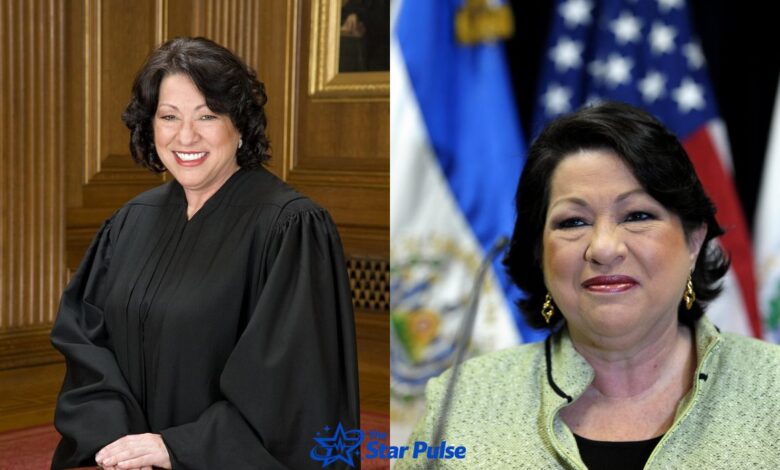
Sonia Sotomayor is one of the most influential figures in American legal history. She became the first Latina and the third woman to serve on the United States Supreme Court, marking a historic milestone for the American judiciary. Born and raised in the Bronx, New York, she overcame personal challenges through education, determination, and years of legal experience. Before joining the Supreme Court in 2009, she worked as a prosecutor, practiced commercial law, and served as a federal judge. Her career has involved important questions about constitutional rights, criminal justice, equality, and individual freedoms. Beyond her courtroom responsibilities, Sotomayor has written books about her life and encouraged young people to pursue their ambitions. This Sonia Sotomayor biography explores her early life, education, family, legal career, Supreme Court appointment, publications, and lasting influence.
Sonia Sotomayor Quick Bio
| Detail | Information |
|---|---|
| Full Name | Sonia Maria Sotomayor |
| Date of Birth | June 25, 1954 |
| Age | 72 years in 2026 |
| Birthplace | The Bronx, New York City |
| Nationality | American |
| Profession | Judge and jurist |
| Parents | Juan Sotomayor and Celina Báez |
| Education | Princeton University, Yale Law School |
| Undergraduate Degree | Bachelor of Arts in History |
| Law Degree | Juris Doctor |
| Supreme Court Appointment | 2009 |
| Appointing President | Barack Obama |
| Famous For | First Latina Supreme Court Justice |
| Memoir | My Beloved World |
Who Is Sonia Sotomayor?
Sonia Sotomayor is an associate justice of the United States Supreme Court, the highest judicial institution in the country. She took her seat in August 2009 after being nominated by President Barack Obama and confirmed by the Senate. Her professional background includes criminal prosecution, private legal practice, and service on two levels of the federal judiciary. These experiences helped prepare her to consider complex legal disputes involving federal statutes, constitutional principles, and individual rights. Sotomayor is also known for explaining her legal views through written opinions and dissents. Although her appointment was a historic achievement for Hispanic representation, her work extends beyond that milestone. Her decisions and legal reasoning form an important part of contemporary American judicial history.
Early Life and Family Background
Sonia Maria Sotomayor was born on June 25, 1954, in the Bronx, New York City. Her parents, Juan Sotomayor and Celina Báez, were of Puerto Rican heritage. She grew up with her younger brother, Juan, in a working-class family. Her father worked as a tool-and-die worker, while her mother later worked as a nurse. When Sonia was nine years old, her father died, leaving her mother to raise the children and support the household. This loss was a major event in her childhood and helped shape her understanding of responsibility and perseverance. Her family background remained an important part of her identity as she progressed through school and developed her professional ambitions. Her early experiences also contributed to the perspective she later shared in her memoir, My Beloved World.
Education and Academic Achievements
Education was central to Sotomayor’s journey toward the Supreme Court. She attended Cardinal Spellman High School in the Bronx and graduated as valedictorian. In 1972, she enrolled at Princeton University, where she studied history and graduated in 1976 summa cum laude. She received the university’s Pyne Prize, one of its highest undergraduate honors. During her time at Princeton, she became involved in student activities and advocated for greater recognition of Puerto Rican students and their experiences. She subsequently attended Yale Law School, earning her Juris Doctor degree in 1979. She also served as an editor of the Yale Law Journal, gaining valuable experience in legal research and writing. These academic achievements helped establish her qualifications for a demanding legal career and demonstrated her ability to succeed in competitive educational environments.
Childhood Ambitions and Interest in Law
Sotomayor’s interest in law began during childhood. She has discussed how detective stories and courtroom television programs helped introduce her to legal careers. Nancy Drew books and the television series Perry Mason were among the influences she has mentioned when reflecting on her early ambitions. These stories encouraged her to think about solving problems, examining evidence, and understanding how legal systems work. As she grew older, this interest developed into a serious professional goal supported by academic preparation. Her experiences at Princeton also exposed her to questions about educational opportunity, representation, and social inclusion. These experiences contributed to her personal development, although her judicial responsibilities ultimately require her to apply established legal principles rather than simply rely on personal beliefs. Her journey illustrates how childhood interests can develop into meaningful career ambitions through sustained effort.
Early Career as a Prosecutor
After graduating from Yale Law School, Sotomayor joined the New York County District Attorney’s Office in 1979 as an assistant district attorney. She worked on criminal cases and gained firsthand experience with investigations, evidence, courtroom arguments, and the responsibilities of prosecuting alleged offenses. This role gave her a practical understanding of criminal law and the procedures involved in presenting cases before a court. It also exposed her to the serious consequences that criminal proceedings can have for defendants, victims, and communities. She remained in the district attorney’s office until 1984. Her prosecutorial experience became an important foundation for her subsequent work in private practice and the judiciary. By learning how criminal cases were prepared and argued, she gained useful insight into the operation of the justice system.
Private Legal Practice and Career Development
In 1984, Sotomayor moved into private practice at the New York law firm Pavia & Harcourt. She worked on commercial litigation, including disputes involving businesses and international commercial relationships. She initially served as an associate and eventually became a partner. This position broadened her experience beyond criminal law and required her to evaluate contracts, analyze evidence, develop legal arguments, and represent clients in complicated disputes. Commercial litigation also exposed her to the practical challenges businesses face when disagreements require legal resolution. Her professional development during this period demonstrated the value of combining different areas of legal experience. By the time she pursued further judicial appointments, she had worked in both public prosecution and private legal practice. This combination helped establish a broad professional foundation for her later responsibilities as a federal judge.
Appointment to the Federal District Court
In 1991, President George H. W. Bush nominated Sotomayor to serve on the United States District Court for the Southern District of New York. The Senate confirmed her appointment in 1992. As a federal district judge, she handled cases involving federal law, legal disputes, and questions requiring careful evaluation of evidence and legal arguments. District courts are generally responsible for conducting trials, managing proceedings, and deciding factual and legal issues that arise in individual cases. The position required impartiality, attention to detail, and the ability to explain decisions through legal reasoning. Sotomayor served on the district court until 1998. This appointment represented a significant step in her career because it moved her from representing parties in legal disputes to making judicial decisions. It also provided valuable experience before her later appointment to a federal appeals court.
Service on the Second Circuit Court of Appeals
President Bill Clinton nominated Sotomayor to the United States Court of Appeals for the Second Circuit in 1997. After Senate confirmation in 1998, she joined the appeals court, where she served until 2009. Federal appeals courts generally review decisions made by lower courts and examine whether the law was applied correctly. Their work involves interpreting statutes, considering legal precedents, and evaluating arguments about possible legal errors. This role strengthened Sotomayor’s experience in appellate reasoning and exposed her to a wide range of complex legal questions. It also provided preparation for the responsibilities of a Supreme Court justice, who regularly reviews significant legal disputes from lower courts. Her years on the Second Circuit formed an important chapter in her professional biography and contributed to the experience considered during her Supreme Court nomination.
Historic Supreme Court Appointment
On May 26, 2009, President Barack Obama nominated Sotomayor to replace retiring Justice David Souter. The Senate confirmed her nomination on August 6, 2009, and she took her seat on August 8. Her appointment made her the first Latina and the third woman to serve on the United States Supreme Court. The milestone was particularly significant for Hispanic and Puerto Rican communities, which had not previously been represented by a Latina justice on the Court. Her appointment reflected both this historic importance and her extensive professional background in prosecution, private practice, and federal judging. Since joining the Court, she has participated in cases addressing constitutional interpretation, criminal procedure, civil rights, and other major legal issues. Her confirmation remains one of the most important events in her life and career.
Judicial Philosophy and Legal Opinions
Sotomayor’s judicial work frequently attracts public attention because of her views on constitutional rights, criminal justice, equality, and the practical consequences of legal decisions. Supreme Court justices must interpret the Constitution, apply federal statutes, and consider established precedents when deciding cases. Sotomayor has written majority opinions, concurrences, and dissents during her service. A dissent explains why a justice disagrees with the Court’s majority, even though it does not determine the immediate legal outcome. Such opinions can contribute to continuing legal debate and influence how future courts understand particular issues. Her legal writing often examines how rules operate in real situations and how judicial decisions affect individuals and communities. To understand her work accurately, it is important to distinguish her personal background from the legal arguments she makes as a justice.
Books and Educational Contributions
Sotomayor is also a published author whose books introduce readers to her experiences and values. Her memoir, My Beloved World, was published in 2013. It describes her childhood, education, professional challenges, and journey toward the Supreme Court. The book provides insight into the people and experiences that helped shape her life. She has also written books for younger readers, including Turning Pages: My Life Story and Just Ask! Be Different, Be Brave, Be You. These publications explore themes such as identity, inclusion, confidence, and learning to appreciate differences. Through her writing, Sotomayor reaches audiences beyond lawyers and legal scholars. Her books are especially relevant to students interested in education, public service, and the experiences that can lead someone toward a career in law.
Personal Life and Health
Sotomayor married Kevin Noonan, her high school sweetheart, in 1976. The couple divorced in 1983, and she has no children. Throughout her career, she has spoken about the importance of family, friends, and mentors in supporting her personal and professional development. She has also discussed living with type 1 diabetes, which was diagnosed during her childhood. Managing the condition has required long-term attention to her health and daily routines. Her openness about this experience has provided readers with a broader understanding of the challenges she has navigated alongside her professional responsibilities. Nevertheless, her public identity is defined by much more than her personal circumstances. Her legal career, educational accomplishments, writing, and service on the Supreme Court remain central to her biography.
Sonia Sotomayor’s Legacy and Influence
Sonia Sotomayor’s influence extends beyond her historic appointment. Her career demonstrates how education, professional preparation, and persistence can create opportunities for individuals from backgrounds that have been underrepresented in influential institutions. As the first Latina Supreme Court justice, she has become an important figure for students and aspiring legal professionals. Her experience across prosecution, commercial litigation, and federal courts also illustrates the different stages that can contribute to a judicial career. Her opinions form part of the continuing development of American law, while her books encourage younger readers to take education and personal ambitions seriously. Her lasting legacy will depend on her judicial work, the principles reflected in her opinions, and the long-term effects of Supreme Court decisions. Her biography remains an important story of achievement, public service, and representation in American history.
Final Thoughts
Sonia Sotomayor’s journey from the Bronx to the United States Supreme Court is a story of determination, education, and professional achievement. Her academic success at Princeton and Yale, early experience as a prosecutor, years in private practice, and service on federal courts prepared her for one of the nation’s most influential judicial positions. Becoming the first Latina Supreme Court justice marked a historic breakthrough, while her continuing work contributes to important legal debates. Through her memoir and children’s books, she has also shared lessons about perseverance, identity, and opportunity. Her life remains an informative example for readers interested in American law, biography, and the importance of representation.
FAQs
1. Who is Sonia Sotomayor?
Sonia Sotomayor is an associate justice of the United States Supreme Court. President Barack Obama nominated her in 2009, and she became the first Latina to serve on the Court.
2. How old is Sonia Sotomayor?
She was born on June 25, 1954, making her 72 years old in 2026. Her legal career includes decades of experience in prosecution, private practice, and federal judicial service.
3. Where did Sonia Sotomayor study?
She attended Princeton University, graduating in 1976 with a history degree, and earned her Juris Doctor from Yale Law School in 1979. Her academic achievements helped prepare her for a distinguished legal career.
4. Is Sonia Sotomayor married?
Sotomayor married Kevin Noonan in 1976, but they divorced in 1983. She has no children and has discussed the importance of family, friends, and mentors in her life.
5. What is Sonia Sotomayor famous for?
She is best known for becoming the first Latina justice on the U.S. Supreme Court. She is also recognized for her judicial opinions, extensive legal experience, and memoir, My Beloved World.