

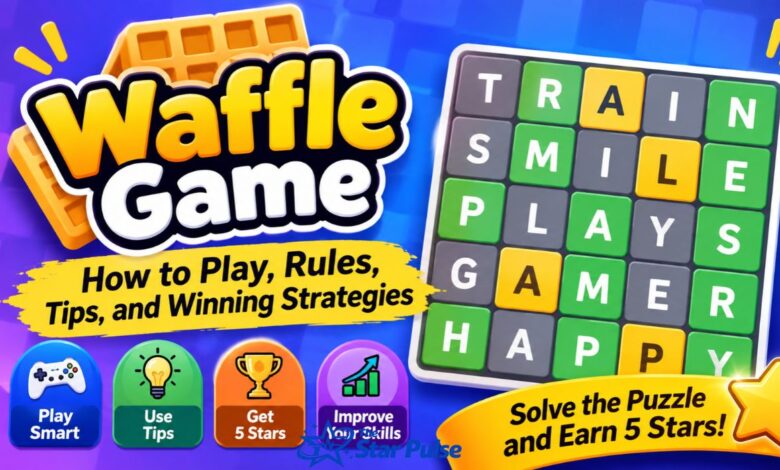
The Waffle Game is an entertaining online word puzzle that combines vocabulary, logical thinking, and strategic problem-solving. Inspired by popular word games such as Wordle, it gives players a different challenge: instead of guessing hidden words, they must rearrange existing letters to create correct words horizontally and vertically. Its waffle-shaped grid, colorful clues, and limited moves make every puzzle interesting. Whether you are a beginner or an experienced puzzle enthusiast, learning the rules and developing effective strategies can make the experience more enjoyable. This guide explains how to play Waffle Game, understand its colors, solve difficult puzzles, earn five stars, and improve your daily performance.
What Is Waffle Game?
Waffle Game is a daily online word puzzle in which players rearrange letters to complete several connected words. In its classic format, the board contains a 5×5 arrangement with 21 letter tiles. Players must create three horizontal and three vertical five-letter words using the letters already provided. Unlike traditional crossword puzzles, there are no empty boxes that require typing new answers. Every necessary letter is already available, but many are placed incorrectly. The challenge is to identify their correct positions using vocabulary knowledge and color feedback. This simple concept creates an engaging experience that rewards careful observation rather than random guessing.
How to Play Waffle Game
Getting started with Waffle Game is straightforward. Open a Waffle puzzle website and select the daily challenge or another available game mode. Once the board appears, examine the letters and identify possible words across the rows and down the columns. Select two letters and exchange their positions to improve the arrangement. Depending on the platform, you can click, tap, or drag tiles to perform a swap. After each move, the game updates the tile colors to show whether the letters are correctly positioned. Your objective is to complete all six words before using the available moves. Beginners should start slowly and understand how every letter affects the surrounding words.
Understanding the Waffle Game Rules
The traditional Waffle puzzle follows a limited-move system. Players generally receive 15 swaps to complete the entire board, while a perfect solution can be achieved in 10 swaps. Each exchange counts as one move, regardless of how many letters become correctly positioned. You cannot simply add another letter or remove an incorrect one; you must rearrange the existing tiles. Every horizontal and vertical word must be valid, and all required positions must eventually turn green. Completing the puzzle with unused moves earns stars in the classic scoring format. However, some alternative versions use different grids, move limits, or scoring systems, so checking the instructions on your selected platform is important.
What Do Green, Yellow, and Gray Tiles Mean?
Understanding the color clues is one of the most important parts of mastering Waffle Game. Green indicates that a letter is already in its correct position and should generally remain untouched. Yellow means the letter belongs to a word connected to that tile but is currently positioned incorrectly. Gray indicates that the letter does not belong in that particular word or is not needed there. These clues help players eliminate incorrect possibilities without testing every arrangement. However, intersection tiles require additional attention because they belong to both a horizontal and vertical word. A yellow corner, for example, may indicate that the letter belongs to either connected word, making the surrounding clues especially important.
How the Six Words Connect
The most interesting feature of Waffle Game is that its words are interconnected. Three words run horizontally, while three others run vertically through the same grid. This means a single letter can influence two different words simultaneously. For example, changing a letter at an intersection may improve both a horizontal word and a vertical word. Players should therefore avoid treating each row as a completely separate puzzle. Instead, examine the entire board and consider how each possible swap affects the connected words. Understanding these relationships makes it easier to identify useful exchanges and prevents unnecessary moves. This interconnected structure is what makes Waffle more strategic than ordinary word-guessing games.
The Best Strategy for Earning Five Stars
Earning five stars is a popular goal among Waffle Game players. In the classic version, stars depend on how many swaps remain after completing the puzzle. A five-star result requires solving the board in the minimum 10 swaps, leaving five moves unused. The best approach is to identify exchanges that place two incorrect letters into their correct positions simultaneously. These are often called pair swaps. Before making a move, check whether the letter in one incorrect position belongs where another incorrect letter is currently located. If both letters need each other’s positions, exchanging them can solve two tiles in one move. Planning these exchanges carefully is more effective than randomly moving letters.
Start With Green Letters
Green letters provide valuable information because they reveal parts of the correct answers. Rather than immediately moving yellow or gray tiles, examine the green positions and use them as fixed reference points. A word containing three green letters may be much easier to identify than a completely mixed-up word. For example, recognizing a familiar five-letter pattern can help you determine the remaining letters without unnecessary guessing. Once you identify a possible word, compare its missing letters with the other rows and columns. This approach reduces confusion and helps you develop a complete understanding of the board before using your limited swaps.
Use Common English Word Patterns
A strong vocabulary can make Waffle Game considerably easier. Many five-letter English words contain familiar combinations, prefixes, and endings. Patterns such as TH, CH, SH, ST, ING, ED, and ER can help players recognize possible answers. Vowels are also useful when identifying incomplete words because most ordinary English words require at least one vowel. However, players should not assume that every familiar combination will fit the puzzle. Always compare a possible word with the green, yellow, and gray clues. Reading words aloud can also help you recognize combinations that might otherwise be overlooked. Regular practice gradually improves your ability to identify word patterns quickly.
How to Solve Difficult Waffle Puzzles
Difficult puzzles usually require more careful planning because several letters may appear suitable for multiple positions. Start by identifying the words with the most green tiles, then examine the intersection points that influence two different answers. Pay special attention to repeated letters because two identical letters do not necessarily have the same position or purpose. If a word needs two E letters, for example, placing only one correctly will not complete it. Compare the number of available letters with the number required in each word. This letter-counting technique helps eliminate incorrect possibilities and makes complicated arrangements easier to understand.
Common Mistakes That Reduce Your Score
One common mistake is making swaps without first understanding their consequences. Every unnecessary exchange consumes a valuable move and can make a five-star result harder to achieve. Another problem is focusing on one horizontal word while ignoring the vertical words connected to it. Players sometimes move a correctly positioned letter because they misunderstand the color feedback. Repeated letters can also cause confusion, particularly when a gray tile appears beside another identical letter. To avoid these problems, examine both connected words before every exchange. It is also helpful to pause when only a few moves remain rather than rushing toward a solution.
Waffle Game Daily Challenge and Unlimited Play
Many Waffle platforms offer a daily challenge that gives players a fresh puzzle according to a scheduled release. This format encourages people to return regularly and compare their performance with previous attempts. Some versions also provide archives, allowing players to revisit older puzzles and practice different arrangements. Unlimited modes may be available on alternative Waffle websites, giving users additional opportunities to improve their skills without waiting for another daily puzzle. Availability depends on the platform, so not every version includes the same features. Daily challenges are particularly useful for developing consistency, while unlimited puzzles provide more opportunities to experiment with different solving techniques.
Waffle Game vs. Wordle: Key Differences
Waffle Game and Wordle share colorful feedback and word-based challenges, but their gameplay mechanics are different. In Wordle, players attempt to discover a hidden five-letter word by entering guesses. Waffle, on the other hand, displays the available letters from the beginning and asks players to rearrange them into six connected words. Wordle focuses on guessing and eliminating possibilities, whereas Waffle emphasizes letter positioning, intersections, and efficient swaps. Both games encourage vocabulary development and logical thinking. However, players who enjoy interconnected puzzles may find Waffle especially appealing because every move can influence multiple answers.
Benefits of Playing Waffle Game Regularly
Playing Waffle Game can provide an enjoyable mental exercise. It encourages players to recognize spelling patterns, compare possible words, remember letter positions, and evaluate different solutions. These activities involve vocabulary, attention, and problem-solving skills. The limited-move format also encourages thoughtful decision-making because players must consider the consequences of each exchange. Another advantage is accessibility: many online versions can be played through a web browser on computers, tablets, and smartphones. Although a word puzzle should not be considered a medical treatment or a guaranteed way to improve intelligence, regular play can be a pleasant addition to a balanced collection of recreational activities.
Final Thoughts
The Waffle Game offers a refreshing combination of word recognition, logical reasoning, and strategic planning. Its simple rules make it accessible to beginners, while its connected words and limited swaps provide enough difficulty to keep experienced players interested. Understanding color clues, recognizing common English patterns, protecting green tiles, and identifying useful pair swaps are essential techniques for improving your results. Whether you prefer the daily challenge or unlimited word puzzles, consistent practice can help you become more confident and efficient. Start with small improvements, learn from unsuccessful attempts, and gradually work toward the five-star solution.
FAQs
1. What is Waffle Game?
Waffle Game is an online word puzzle where players rearrange letters to form three horizontal and three vertical words. Its classic version uses a 5×5 waffle-shaped grid and provides color clues to guide players toward the correct arrangement.
2. How many moves do you get in Waffle Game?
The classic Waffle puzzle generally provides 15 swaps. Players can solve the entire board in as few as 10 swaps, making five stars possible when they achieve the minimum-move solution.
3. What do the colors mean in Waffle Game?
Green means a letter is in the correct position, yellow indicates that it belongs in a connected word but is misplaced, and gray shows that the letter is not needed in that particular word.
4. How can I get five stars in Waffle Game?
To earn five stars in the classic version, complete the puzzle in 10 swaps. Focus on green letters, recognize complete word patterns, and look for opportunities to exchange two letters that belong in each other’s positions.
5. Is Waffle Game similar to Wordle?
Yes, both are word puzzles that use colored feedback, but their mechanics differ. Wordle requires players to guess a hidden word, while Waffle asks them to rearrange existing letters to complete six connected words.