
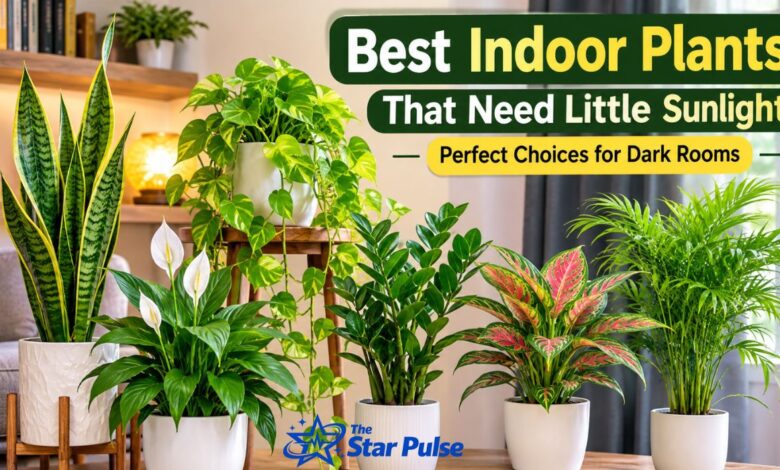
You do not need a bright, sunny home to enjoy beautiful indoor greenery. Many houseplants can grow in rooms with limited natural light, making them perfect for apartments, offices, bedrooms, and shaded corners. The Best Indoor Plants for low-light environments are usually varieties that naturally grow beneath trees or in shaded tropical forests. These plants can tolerate indirect light and generally require less maintenance than sun-loving varieties. However, low light does not mean complete darkness. Every green plant needs some light for healthy growth. In this guide, we explore 13 useful topics, including the best low-light plants, their care requirements, watering tips, and common mistakes to avoid.
Snake Plant: A Hardy Choice for Dark Rooms
ZZ Plant: Perfect for Low-Maintenance Homes
The ZZ plant (Zamioculcas zamiifolia) is famous for its glossy leaves and impressive ability to tolerate neglect. It grows well in low to medium indirect light and is suitable for offices, apartments, and shaded living room corners. Its underground rhizomes store moisture, helping the plant survive dry periods. Water only when the potting mixture has dried, as excessive watering can cause root rot. Its attractive appearance also makes it a popular choice for modern interior decoration. Keep this plant away from pets and children because it is toxic if chewed.
Pothos: A Beautiful Trailing Indoor Plant
Pothos, commonly called devil’s ivy, is an attractive trailing plant with heart-shaped leaves. Popular varieties include golden pothos, marble queen, and jade pothos. It tolerates limited natural light and looks beautiful in hanging baskets, bookshelves, and decorative pots. However, varieties with colorful leaf patterns may lose some of their markings in very dark conditions. Water when the upper layer of soil becomes dry, and trim long vines to maintain a fuller appearance. Pothos is particularly useful for small apartments because its trailing growth adds greenery without occupying much floor space. It is toxic to pets.
Peace Lily: Elegant Greenery for Indoor Spaces
Peace lilies (Spathiphyllum) are recognized for their deep-green leaves and beautiful white flower-like structures. They can tolerate low to medium indirect light, although brighter filtered light usually encourages flowering. These plants prefer slightly moist soil, so check the potting mixture regularly. Their leaves may droop when they need water, making it easier to recognize moisture stress. Avoid direct afternoon sunlight because it can damage their leaves. Peace lilies are excellent decorative choices for bedrooms and living rooms, but they are toxic to cats and dogs.
Cast Iron Plant: Excellent for Neglected Corners
The cast iron plant (Aspidistra elatior) is known for surviving challenging indoor conditions. Its broad, dark-green leaves create a natural appearance and work beautifully in shaded corners and hallways. It tolerates low light, irregular watering, and relatively dry indoor conditions. Allow the soil to dry slightly between watering sessions, and remove damaged leaves when necessary. This plant grows slowly, so it may take time to develop a fuller appearance. Its durability makes it particularly suitable for beginners who want long-lasting greenery without complicated care routines.
Chinese Evergreen: Colorful Plants for Low-Light Rooms
Chinese evergreen (Aglaonema) is a decorative houseplant available in different colors and patterns. Some varieties have dark-green leaves, while others feature attractive silver, cream, pink, or red markings. Green varieties generally tolerate lower light better than highly colorful varieties. Place the plant in a warm location with indirect light and use well-draining soil. Water when the upper layer of soil begins to dry. Its compact growth makes it suitable for office desks, shelves, and small apartments. Chinese evergreen is toxic if ingested by pets.
Heartleaf Philodendron: Ideal for Small Apartments
Heartleaf philodendron (Philodendron hederaceum) is a popular indoor plant because of its attractive leaves and trailing stems. It grows comfortably in low to medium indirect light and can decorate shelves, hanging baskets, and small tables. Its flexible vines can be trimmed to control their length or propagated to grow additional plants. Water when the upper portion of the soil becomes dry, and avoid keeping its roots constantly wet. This plant is particularly useful for people who want greenery without using valuable floor space. It is toxic to cats and dogs.
Parlor Palm: A Tropical Look Without Direct Sunlight
The parlor palm (Chamaedorea elegans) brings a tropical appearance to indoor spaces through its delicate, feather-shaped leaves. It tolerates relatively low indoor light and does not require direct sunlight. It is suitable for bedrooms, living rooms, and office interiors. Keep its soil lightly moist without allowing water to collect around the roots. Moderate humidity and protection from cold drafts also help maintain healthy foliage. Because it grows slowly and remains relatively compact, the parlor palm is an excellent decorative choice for smaller homes.
Dracaena: Stylish Plants for Modern Interiors
Dracaena varieties are popular because of their attractive foliage and upright growth. Depending on the species, their leaves may be narrow, broad, striped, or edged with contrasting colors. Some varieties tolerate lower light better than others, so check their individual requirements before purchasing. Dracaena plants look particularly attractive in living rooms and offices. Water when the upper soil becomes partially dry, and avoid placing them near heating equipment. Some varieties are sensitive to minerals and fluoride in tap water, which may contribute to brown leaf tips. Dracaena is toxic to cats and dogs.
Bird’s Nest Fern: Fresh Foliage for Shaded Spaces
Bird’s nest fern (Asplenium nidus) is a beautiful tropical plant with broad, wavy green leaves that grow from a central rosette. It naturally grows in sheltered environments and prefers filtered or indirect light. Unlike snake plants and ZZ plants, it requires consistently moist soil and higher humidity. Water around the soil instead of pouring water directly into the center of the plant, where trapped moisture may encourage rot. Bathrooms with suitable natural light can provide a comfortable growing environment. Its lush appearance makes it a wonderful choice for adding greenery to shaded rooms.
How to Care for Indoor Plants That Need Little Sunlight
Choosing the right plant is only the beginning. Proper care helps low-light plants remain healthy throughout the year. First, understand that low-light plants still need natural or artificial light. Second, avoid overwatering because plants growing in darker locations often use moisture more slowly. Always check the soil before watering. Third, choose containers with drainage holes to prevent water accumulation. Clean dusty leaves occasionally so they can receive available light more effectively. Rotate pots every few weeks to encourage balanced growth. Finally, inspect leaves regularly for pests such as spider mites and mealybugs. These simple habits can help prevent common problems.
How to Choose the Right Indoor Plant for Your Room
The right plant depends on your room’s lighting, available space, and maintenance requirements. Snake plants and ZZ plants are suitable for beginners because they tolerate occasional missed watering. Pothos and heartleaf philodendrons are excellent for shelves and hanging baskets. Peace lilies and bird’s nest ferns are better choices for people who can provide more consistent moisture and humidity. Before purchasing, observe how much daylight reaches your intended location. If your room receives almost no natural light, consider using an LED grow light. Choosing a plant according to its natural requirements is more effective than trying to make every variety grow in the same conditions.
Common Mistakes to Avoid When Growing Low-Light Plants
One major mistake is assuming that shade-tolerant plants can survive in complete darkness. Every green plant needs light for photosynthesis. Another common problem is watering according to a fixed weekly schedule instead of checking soil moisture. Using pots without drainage holes can also cause root damage. Additionally, placing plants near air conditioners, radiators, or cold windows may create unnecessary stress. Some homeowners forget to research the mature size of their plants and eventually run out of space. Before purchasing, check the plant’s lighting, watering, humidity, growth, and toxicity requirements. Understanding these details makes indoor gardening easier and more successful.
Final Thoughts
The Best Indoor Plants for rooms with limited sunlight can make your home more attractive without requiring a large garden or complicated maintenance. Snake plants, ZZ plants, pothos, peace lilies, cast iron plants, and Chinese evergreens are among the most practical choices. However, every variety has different watering, humidity, and lighting requirements. Remember that low-light tolerance does not mean a plant can survive without light. With suitable placement, careful watering, and occasional maintenance, you can create a beautiful indoor garden even in rooms that receive limited natural sunlight.
FAQs
1. What are the best indoor plants for low-light rooms?
Snake plants, ZZ plants, pothos, cast iron plants, and Chinese evergreens are excellent choices. They tolerate lower light conditions better than many common houseplants.
2. Can indoor plants survive without sunlight?
Some plants can survive without direct sunlight, but ordinary green houseplants cannot grow indefinitely without light. Artificial LED grow lights can provide the energy they need.
3. Which indoor plant requires the least maintenance?
ZZ plants and snake plants are among the easiest options. They tolerate low light and occasional missed watering when grown in well-draining soil.
4. Are low-light indoor plants suitable for bedrooms?
Yes. Snake plants, ZZ plants, and parlor palms can be suitable bedroom plants when sufficient indirect light is available. Check toxicity if pets can access them.
5. How often should I water indoor plants in low light?
Watering frequency depends on the plant and its environment. Snake plants and ZZ plants prefer dry soil between watering, while peace lilies and ferns need more consistent moisture. Always check the soil before watering.